How threat defense works with zero trust access
Summary
The key components involved in the Threat Defense Zero Trust Access process are:
-
Remote or on-premises user: Initiates HTTPS requests from an endpoint using a browser to connect to applications.
-
Threat Defense firewall: Intercepts user requests and redirects them to the identity provider for authentication and authorization.
-
Identity Provider (IdP): Handles the authentication and authorization process for users attempting to access protected applications.
-
Protected web applications: Applications secured behind the firewall that users can access after successful authentication.
Workflow
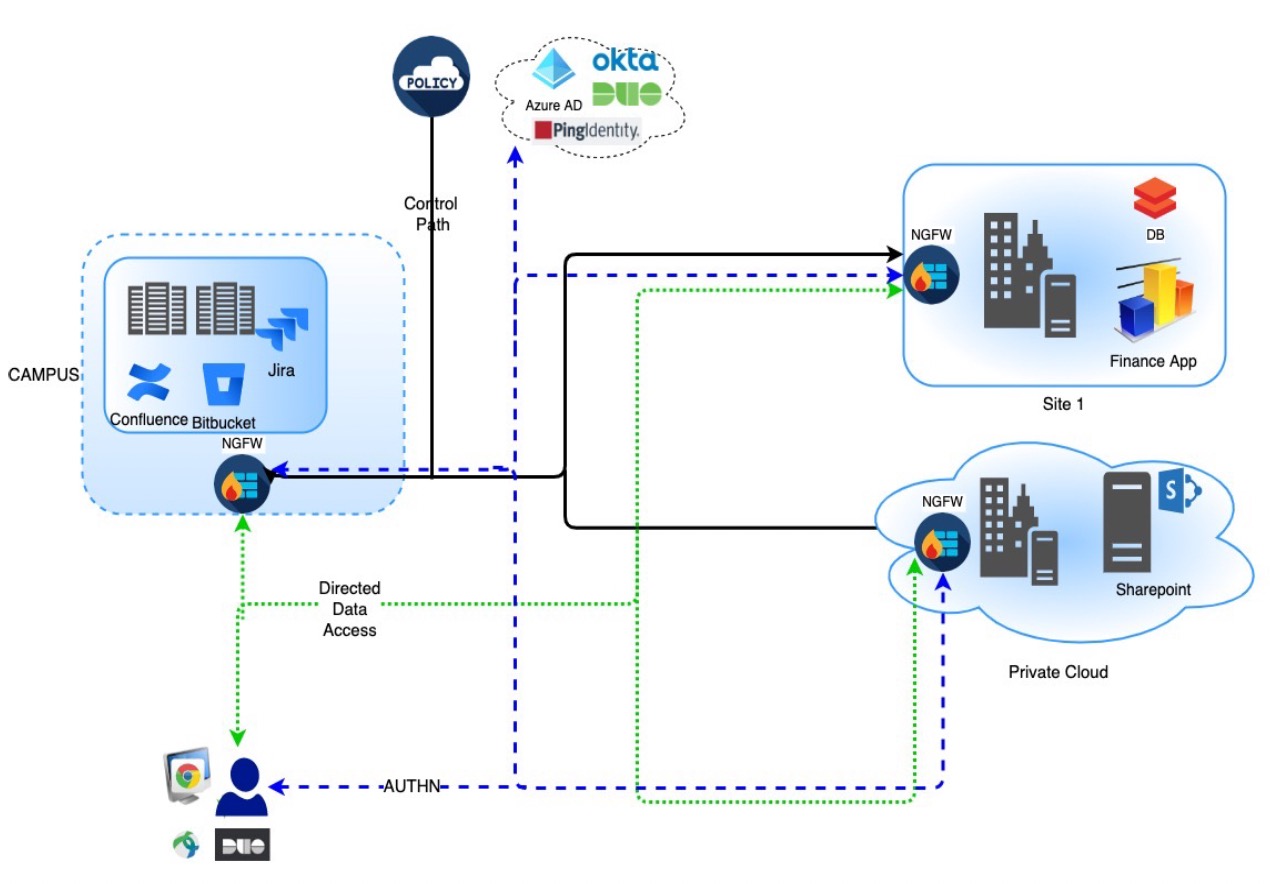
These stages describe how Threat Defense works with Zero Trust Access:
- Using a browser, a remote or on-prem user sends a HTTPS request to connect to an application from an endpoint.
- The HTTPS request is intercepted by the firewall that protects the application.
-
The firewall redirects the user to application's configured IdP for authentication.
Note
In the figure, each firewall protects a set of web applications. The user can directly access the applications behind the firewall after authentication and authorization.
- After the authentication and authorization process is complete, the firewall allows the user to access the application.